
Ever had a patient ghosting you after their first visit?
One moment they’re sitting in your office nodding along, and the next they’ve disappeared into thin air, leaving you wondering if they’d existed at all. Younger patients, meanwhile, seem to avoid in-person appointments like the plague, turning instead to Dr. Google or having ChatGPT diagnose that persistent cough and recommend a course of treatment according to a few vague symptoms.
And it’s not just frustrating – it’s costly. With the average cost of a single missed appointment estimated at around $200, these losses add up fast. For an independent practice, just two no-shows per day can translate into $150,000 or more in lost revenue annually.
This is the very reason patient engagement programs have become such a focal point of running a successful practice. Of course, neither Google nor AI tools are quite ready to replace real physicians. What starts as a harmless search can lead to panic, dangerous self-diagnosis, or overlooked warning signs that only a trained professional would recognize.
At the same time, physician-patient relationships are evolving. What used to be built up over time with office visits is now heading toward something faster, virtual, and more convenient. If that experience is not seamless or personalized, patients will not think twice about disappearing.
To protect revenue, keep schedules full, and turn first-time visitors into loyal patients, healthcare providers today need structured patient engagement strategies.
What is patient engagement?
Patient engagement is more than simply sending reminder notices or handing out pamphlets. It’s a two-way relationship where patients are kept informed, active, and motivated throughout each stage of their care.
From first contact through follow-up post-visit, it’s a process that never ends. One that is based on open patient communication, personalized experiences, and the right digital tools to support both parties – patients and providers.
When engagement succeeds, patients aren’t simply seen. They are active partners in their care. And that is where actual improvement starts.
Why patient engagement strategies are more crucial than ever
Patient engagement strategies are the methods clinics use to attract, involve, and retain patients – before, during, and after care.
They include everything from booking systems and reminders to follow-up communication, feedback loops, and internal coordination between staff.
Internal communication is worth more than people give it credit for.
Tools like Chanty, a HIPAA-compliant internal collaboration platform for healthcare teams, allow staff to stay on top of updates, share tasks, and coordinate care without drowning in email chains or shouting details across corridors. When your team communicates clearly, patients feel it – even when they can’t quite name why.
These strategies, online or face-to-face, automated or personal, shape the entire patient experience. And they often determine whether a patient returns, or leaves you high and dry after visit number one.
Because let’s get real: when something goes wrong, patients don’t necessarily complain. They vanish. They reschedule sessions, skip follow-up appointments, or fail to show up to begin with. For your business, that means time slots filled with nothing, lost revenue, and a damaged reputation that’s difficult to repair.
Today’s patients expect ease, speed, and a sense of control. They expect care to be as seamless as grabbing takeout – convenient, on-demand, and hassle-free. If it’s not, they won’t complain. They’ll simply leave.
That is why tools like digital patient engagement software matter. But before choosing platforms, it’s worth mapping exactly which parts of the care pathway are draining your time, trust, and patient loyalty – and addressing each one with intention.
Stage 1: Patient acquisition
Patient acquisition is the process of attracting and converting new patients before they enter the care system.
You can’t engage patients who never set foot in the door.
Acquisition comes before engagement. And in 2026, acquiring patients means meeting them where they already are: online, on mobile, and sceptical.
Online-first patients today want to gather as much information as possible before booking an appointment. This is especially true for Millennials, 51 % of whom visit a primary physician less than once per year and rely on peer reviews when choosing providers. They scan web reviews, compare convenience, and expect transparency prior to ever calling a clinic. Your patient acquisition strategy isn’t just about being visible – it’s about frictionless access from discovery to booking.
A strong patient acquisition system typically includes:
- A mobile-friendly, fast-loading website
- Streamlined online booking with instant confirmation
- Faster follow-up responses – within minutes. not hours
- Clear pricing or insurance transparency
- And, most crucially, a stellar first impression in Google search
This is not new-age fluff – it actually makes a difference in long-term engagement. Patients who hit a brick wall before even showing up for their first appointment will never come back. And slow intake processes torch trust before it’s ever been built. Strong acquisition strategies blend clinical expertise with health technology: knowing which marketing channels to use, how to convert leads into bookings, and where patients drop off.
Internal coordination starts at acquisition. When a new patient inquiry comes in, the clock starts ticking. Chanty enables front-desk staff to receive real-time notifications for new bookings and inquiries – so no lead goes cold while sitting in an unmotivated inbox. A missed call answered in 5 minutes is a patient. Answered the next day? They’ve already called your competitor.
Tools for patient acquisition
WebPT

WebPT
Originally built for physical therapy clinics, WebPT is now an end-to-end solution that helps healthcare businesses attract and manage patients. It has lead tracking, referral management, electronic intake forms, and analytics to help you understand how patients discover and engage with your clinic – before and after scheduling.
Relias

Relias
Relias is more staff and learning development, but it’s also offering data-driven insights that will support better acquisition. Its onboarding and patient satisfaction tools enable clinics to track gaps in communication and maximize engagement. If your front-end staff engages with the patient experience, Relias equips and aligns them for better performance.
Stage 2: Patient onboarding
Patient onboarding is the process of guiding a new patient from booking to their first visit through intake, instructions, and communication.
Even a highly motivated patient will abandon your practice if the intake process feels like bureaucratic torture. Paper forms, duplicate data entry, no confirmation message – any of these can make patients feel like they’ve made a mistake before care has even started.
That’s where patient intake software comes in. It simplifies data collection, e-signatures, and pre-visit surveys so patients feel taken care of instead of bogged down. No one likes to arrive early just to sign their name three times on a clipboard.
Patient onboarding software supports the early relationship between patient and clinic by improving communication before the first visit.
It often includes:
- Softer appointment reminders
- Walk-throughs for procedure prep
- Personalized welcome messages
It’s a gentle handshake that builds trust and confidence before the first face-to-face meeting.
Clinics that get onboarding right reduce no-shows, improve satisfaction scores, and set a positive tone for the entire care relationship. Clinics that don’t often wonder why engaged patients stop coming back.
Patient onboarding tools
IntakeQ

IntakeQ
A robust platform built for digital patient intake. IntakeQ allows clinics to automate from HIPAA-compliant form collection to payment authorization and consent signatures. It includes conditional logic, pre-filled fields, and integration with top EHR systems – allowing staff to see more patients, fewer forms.
Jotform

Jotform
Jotform is widely recognized for its easy-to-use form builder, making it a go-to solution for patient intake in healthcare settings. Clinics and private practices rely on Jotform to create customizable, HIPAA-friendly forms for new patient registration, consent, and feedback. It helps streamline onboarding by capturing responses in real time and syncing them with other tools in your workflow.
For even more seamless coordination, when a patient submits an intake form via Jotform, a Chanty task is automatically created for the relevant staff member – whether that’s front-desk verifying insurance, a nurse reviewing medical history, or billing confirming coveragee. No form sits forgotten in an email thread. Every submission becomes an assigned, trackable action. This is the kind of frictionless coordination that patients never see – but always feel.
Stage 3: Early engagement
The first visit isn’t the finish line – it’s where the real work begins.
Early engagement is the stage where clinics maintain contact with patients immediately after their first visit to ensure continuity of care, adherence to treatment, and long-term retention. This is also where many clinics lose momentum.
Younger patients are the hardest to hold on to. Gen Z grew up with smartphones in hand. They can check anything, anywhere, in an instant. When it comes to their health, they don’t rely on just one source – they cross-check advice online, in apps, through social media, and sometimes even with their parents. That’s why, if they’ve chosen your clinic, that’s already a small win. But keeping the connection alive after that first visit is where most practices fall.
Without active communication, questions go unanswered. Medications are forgotten. Appointments slip through the cracks. And suddenly, you’re trying to get somebody back who has already drifted away – and that can have real consequences for their health.
Early communication must be intentional, timely, and delivered through channels patients actually use.
Digital patient engagement tools help clinics achieve this through:
- Post-visit follow-up messages (automated, but personalized)
- Appointment reminders via text, email, or in-app – in the channel patients actually use
- Medication reminders tied to treatment plans
- Two-way messaging so patients can ask questions without playing phone tag
These systems reduce friction between visits and help maintain continuity of care.
Done correctly, early engagement is not just administrative communication. It becomes trust-building at scale.
For patients with long-term or complex care, care management systems provide structured follow-up, track progress, and ensure continuity across visits.
Tools that support early engagement
Luma Health
LumaHealth
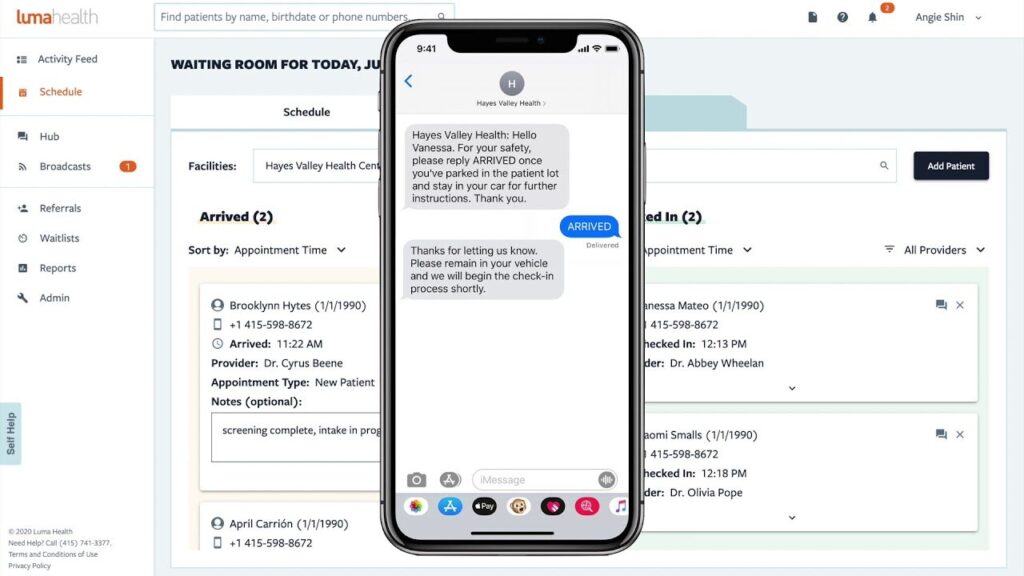
Luma Health is a specialist in keeping communication flowing following the first visit. With smart reminders to two-way texting in real-time, it enables clinics to automate follow-ups, reschedule, and reach patients in the type of responsiveness they have come to expect from online businesses.
Klara

Klara
Klara offers one platform for communication that closes the gap among patients, providers, and staff by getting everyone into one HIPAA-covered inbox. It permits texting, voice, and file sharing – all without patients having to download an app. This facilitates easy staying connected and maintains the initial engagement process easy and familiar.
Stage 4: Internal coordination
Internal coordination in healthcare refers to how effectively clinical and administrative teams communicate, share updates, and manage tasks across departments.
You can have the best intake process and a perfect EHR – but if your team isn’t on the same page, the patient will feel it. Delays, repeated questions, confusing instructions – these aren’t usually the result of bad care, but of disconnected teams.
A typical clinic nurse juggles calls, emails, pages – often across multiple platforms simultaneously, and don’t forget the hallway conversations. According to healthcare workflow research, nurses receive 70-100 communication events per day. When information is scattered across those channels, critical updates get missed, tasks get lost, and patients experience care that feels disorganized – even when it isn’t.
That’s why frictionless internal coordination isn’t a “back office” issue. It directly affects the patient’s experience.
To deliver truly patient-centered care, teams such as front-desk staff, nurses, physicians, and billing departments need to:
- share updates in real time
- flag urgent issues immediately
- resolve questions without delay
- work from a shared communication system
When coordination is structured and frictionless, patients experience smoother, more consistent care without seeing the complexity behind it.
Tools that facilitate coordination
Chanty

Chanty
Chanty is a feature-rich and swift internal communication software for clinics that unifies HiIPAA-compliant team chat, voice/video calls, task management, and file sharing in one place. It’s simplicity itself – no noise, no mess – and easily integrates with systems you already know and use. With voice message capability, role-based permissions, and @mentions, Chanty gets everyone from reception to radiology on the same page. Teams can create dedicated channels for departments or cases, reducing chaos and boosting accountability.
TigerConnect
TigerConnect
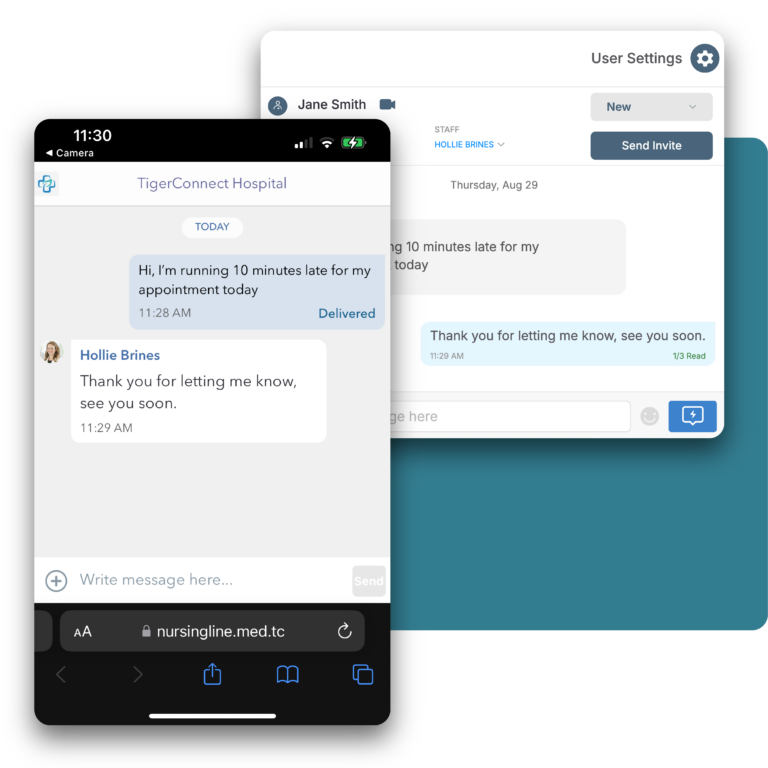
TigerConnect is a secure clinical collaboration platform for hospitals and large practices. It features HIPAA-compliant chat, on-call schedules, and a signal that cuts through the noise. In high-urgency settings, it delivers the right message to the right person without delay.
Stage 5: Engaged over the long term
Engagement doesn’t conclude with the end of the appointment. In fact, this is really where long-term relationships are either built or quietly abandoned.
Patients don’t merely want reactive care – they expect updates, reminders, and relevant health guidance tailored to their specific needs. Without proactive outreach, even satisfied patients drop out of sight. This is where patient engagement software comes in handy: helping providers maintain meaningful connections with minimal effort.
The goal is to build trust between appointments. Not through spammy emails or generic newsletters – but through thoughtful, timely communication delivered through channels patients actually use.
Chanty’s task management system allows care teams to set recurring reminders for scheduled patient check-ins – ensuring that no proactive outreach falls to “no one.” When long-term engagement is someone’s job in Chanty, it actually gets done.
Tools that forge patient relationships
Spruce Health

Spruce Health
Spruce is a secure two-way communication platform for patients and care teams. It includes texting, video visits, and shared inboxes that allow follow-up to be personal and intuitive. You can leverage it for quick check-ins, pre-visit preparation, or ongoing care coordination. It’s also ideal for private practices and behavioral health where relationship building is crucial.
Stage 6: Feedback and improvement
Engagement is a two-way process. To truly improve the patient experience, clinics must not only communicate – but listen as well. But healthcare professionals too often treat feedback as an afterthought or hear it so late that they can no longer make a difference.
That is where patient feedback software comes in. It captures insights in real-time – after the visit, during treatment, or when something has gone wrong. Top platforms transform raw feedback into trends, alerts, and to-do’s.
When practices respond quickly to feedback, patients know their voices matter. This builds loyalty, drives continuous improvement, and ultimately leads to better care – and better reviews.
Software that closes the feedback loop
Qualtrics XM for Healthcare

Qualtrics XM
Qualtrics assists healthcare teams in collecting structured feedback at each patient touchpoint. Surveys can be event-triggered (e.g., post-discharge or post-telehealth appointment). The analytics of the platform uncover patterns – such as what leads to dissatisfaction or what brings patients back.
rater8
rater8
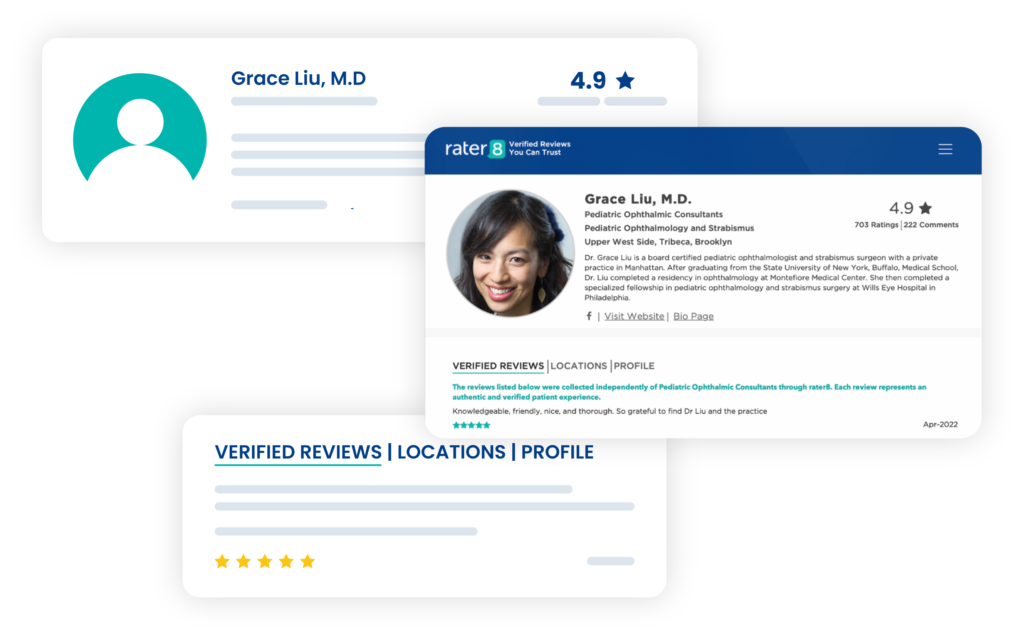
rater8 is a patient feedback platform designed to help healthcare providers collect and analyze real-time patient reviews. It automates post-visit surveys via text or email, capturing feedback immediately after appointments. The platform’s analytics highlight trends in patient satisfaction, identify high-performing providers, and reveal areas needing improvement – helping practices strengthen their reputation and enhance the overall patient experience.
Wrapping up: patient engagement Is a journey – not a feature
Engaged patient don’t appear out of nowhere. They’re built – through thoughtful acquisition, effortless onboarding, conscientious support, and ongoing follow-up. Every step in this journey requires more than good intentions: it requires the right technology and the right internal processes to back it up.
Healthcare organizations that invest in tools for intake, coordination, communication, and feedback don’t just make patient life easier. They also free their own staff to do the work that actually matters – without drowning in the administrative noise that burns people out.
And here’s the thing most healthcare organizations overlook: the biggest gains in patient engagement often don’t come from patient-facing tools. They come from getting your internal team aligned first. When everyone – from reception to radiology – is working from the same information, communicating through the same channel, and acting on the same tasks, the patient experience improves automatically.
Chanty can help. It’s the HIPAA-compliant internal communication platform that unifies your team’s messaging, tasks, scheduling, and coordination in one place – so every patient interaction is safe and backed by a team that knows what’s going on.
Book a demo today to see how Chanty can transform your internal communication. Because when your team communicates effectively, your patients feel it – and that’s where meaningful engagement begins.
FAQ
What are patient engagement strategies?
Patient engagement strategies are the methods healthcare providers use to attract, involve, and retain patients across every stage of the care journey – from the first booking through long-term follow-up. They include digital tools, communication workflows, onboarding processes, and feedback systems designed to keep patients active and informed in their own care.
Why do patients ghost their doctors?
Patient ghosting is most commonly caused by friction – a complicated booking process, a poor first impression, a lack of follow-up, or a feeling that the provider doesn’t value their time. Younger patients, particularly GenZ and Millennials, have high expectations for digital convenience and will simply switch providers if the experience doesn’t meet them.
What is the best tool for international communication in a clinic?
For small-to-mid-sized independent practices, Chanty is purpose-built for accessibility: HIPAA-compliant, intuitive, affordable, and zero IT setup required. It combines team chat, voice notes, task management, and file sharing in one place.
How much does a missed appointment actually cost?
The average cost of a single missed appointment is estimated at approximately $200 (MGMA, 2023), accounting for the direct revenue loss and the overhead cost of the unfilled time slot. For a practice experiencing just two now-shows per day, that adds up to more than $150,000 in lost annual revenue – not counting the downstream impact of disengaged patients who don’t return.
How do I reduce patient no-shows?
The most effective no-show reduction strategies combine automated appointment reminders, easy online rescheduling, and proactive follow-up after missed appointments. Internally, ensuring that the right staff member owns each patient communication prevents reminders from falling through the cracks.